Indoor Air Quality Inspection Services for Healthcare
By Steira Air Editorial Team · Updated 2026-08-05
Indoor air quality inspection services for healthcare facilities from Steira Air combine real-time HVAC coil monitoring with preventive maintenance protocols built for mission-critical environments. Steira Air has nine years of experience in HVAC solutions, utilizing a Coil Monitoring and Management System to track efficiency continuously, identifying hidden losses before they compromise patient safety, staff wellbeing, or facility compliance standards.
Core Benefits of Healthcare IAQ Inspections
- Professional air quality inspections protect patients and staff through regulated environmental testing protocols.
- Industrial hygienists conduct decades of specialized experience ensuring contaminant-free air in healthcare facilities.
- Steira Air serves Snellville, GA with targeted solutions including duct cleaning and humidity control.
- Comprehensive testing addresses dust, allergens, odors, and mold to maintain facility compliance standards.
Why Do Healthcare Facilities Need IAQ Inspections?
Contaminated air circulates directly into patient rooms, operating suites, and waiting areas, raising infection risk for the most vulnerable occupants. Facility managers who delay inspection lose more than efficiency. They risk compliance violations, HVAC failures, and airborne exposure events that put patients and staff in danger. Regulated, professional Indoor Air Quality Inspection Services address these risks directly, keeping patients and staff protected through consistent environmental testing and monitoring.
Steira Air has built a reputation as a trusted leader in preventive maintenance, inspection, and related services for facilities where failure isn’t an option. Hospitals, surgical centers, and long-term care campuses depend on this track record because equipment downtime or poor air quality carries consequences far beyond inconvenience. The company’s ownership team brings more than 30 years of combined expertise to maintaining equipment efficiency. Clean indoor environments across mission-critical settings.
Is IAQ testing legally required in healthcare facilities?
Regulatory bodies treat indoor air quality as a public health matter, not an optional upgrade. State health agencies operate dedicated indoor air quality branches, a clear signal that regulators expect ongoing oversight of occupied buildings, including healthcare facilities. Skipping inspection cycles leaves administrators exposed to citations and, more urgently, exposed patients.
What happens when facilities skip IAQ inspections?
Deferred inspections allow contaminants to accumulate unnoticed inside ductwork, coils, and air handling units. Consequences compound over time:
- Elevated infection risk among immunocompromised patients
- Reduced HVAC efficiency and higher energy costs
- Increased likelihood of regulatory non-compliance
- Deteriorating air quality that staff and visitors can detect firsthand
Consistent inspection cycles catch these problems early. Facilities that treat IAQ testing as routine — not reactive — protect occupants while avoiding costlier remediation down the line.
What Does A Professional IAQ Inspection Include?
A complete Indoor Air Quality Inspection Services protocol combines visual assessment, surface testing, and airborne pollutant analysis. Facility managers who skip any one of these steps risk missing contamination sources that trigger infection-control violations or costly HVAC downtime. Understanding each component helps EHS professionals evaluate whether a vendor’s process meets healthcare-grade standards.
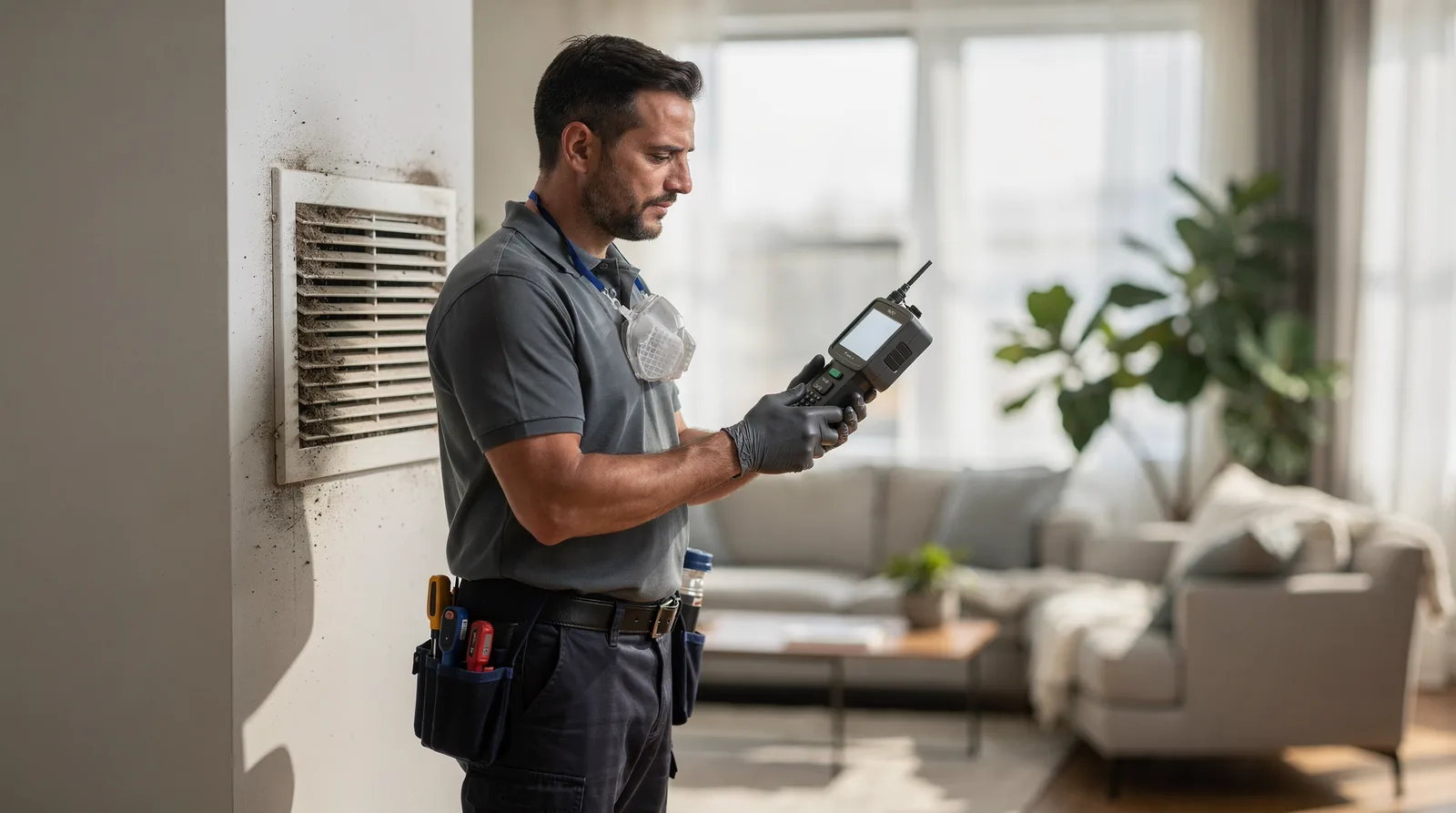
Inspectors start with a detailed visual examination of areas considered affected or at-risk, such as patient rooms, air handler closets, and duct access points. This step flags visible moisture damage, staining, or debris buildup before any equipment gets deployed. Skipping this stage often means expensive testing dollars spent in the wrong location.
What testing methods do inspectors use?
Comprehensive assessments pair swab testing with sampling for airborne impurities. Swab testing captures surface-level contamination on coils, ductwork, or equipment housings. Airborne testing measures what staff and patients actually breathe, giving facility teams a fuller contamination picture than either method alone.
Does the inspection cover more than mold or bacteria?
Yes. A focused inspection also traces pollutant sources, humidity irregularities, and ventilation gaps that undermine air exchange rates. These three factors often work together: excess humidity feeds microbial growth, while ventilation gaps prevent contaminated air from clearing properly.
A thorough inspection report typically addresses:
- Visual findings across patient care areas and mechanical spaces
- Surface swab results from coils, ducts, and high-touch equipment
- Airborne pollutant readings capturing real-time exposure levels
- Humidity and ventilation analysis identifying gaps that sustain contamination
Steira Air, headquartered in Snellville, Georgia, positions its inspection teams to respond directly to mission-critical facilities across the region. Proximity matters for hospitals and healthcare campuses that cannot tolerate delayed diagnostics or scheduling gaps. Regional presence supports faster turnaround between inspection and remediation planning, keeping patient-care environments protected without prolonged exposure windows.
How Does Real-Time Coil Monitoring Improve Outcomes?
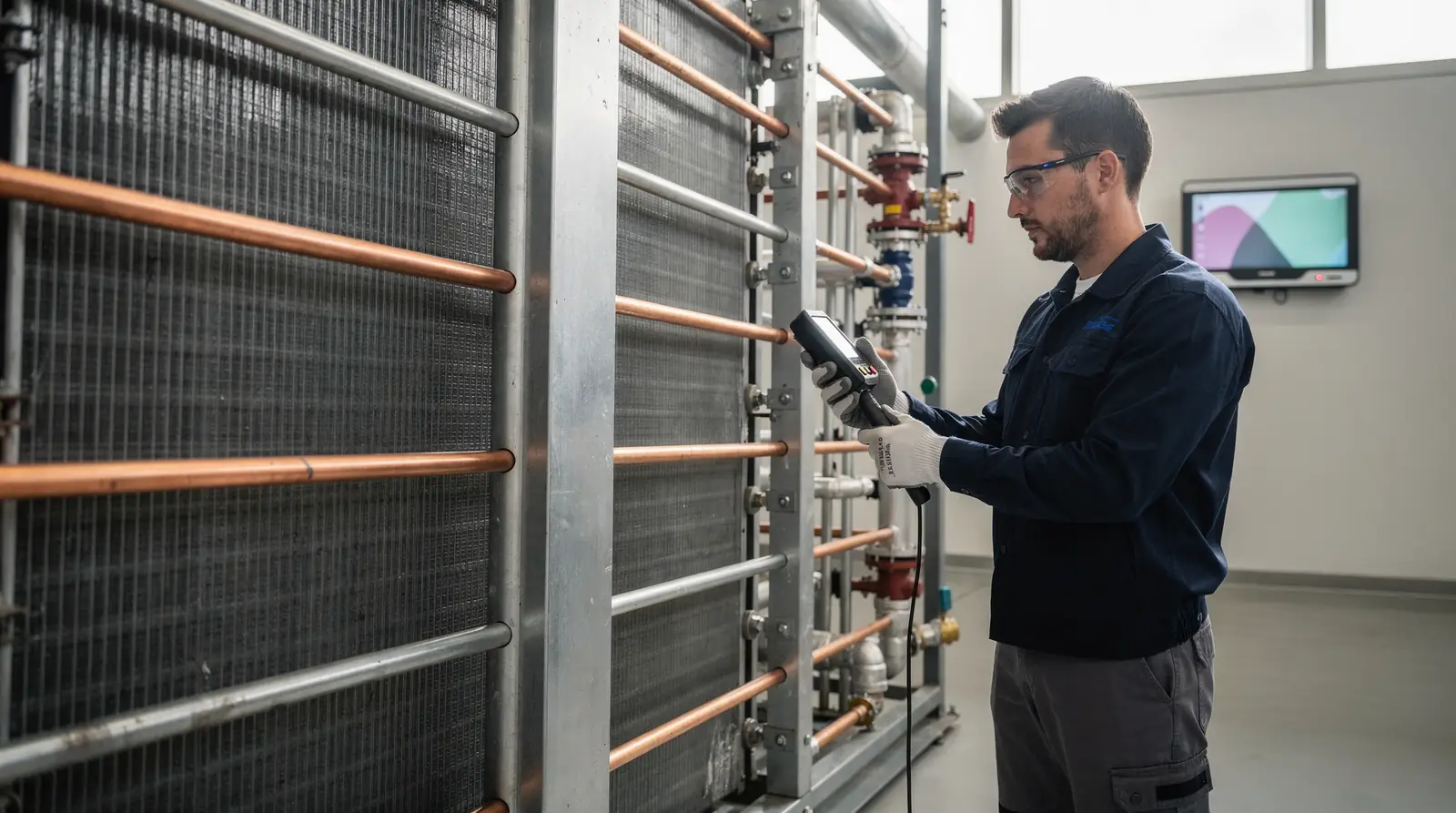
Coil degradation hides in plain sight. Efficiency erodes gradually, energy costs climb, and airflow quality suffers long before symptoms trigger a maintenance ticket. Steira Air’s Coil Monitoring and Management System, described by the company as the first-ever platform of its kind, closes that visibility gap by tracking coil performance continuously rather than at scheduled inspection intervals.
For hospital operations directors, this shift matters because HVAC coils directly influence air filtration and humidity control across patient care areas. A coil losing efficiency silently compromises the same systems infection control teams rely on to manage airborne risk. Continuous tracking replaces guesswork with data. Facilities engineers see coil condition at any moment instead of waiting for a quarterly walkthrough.
What Do Real-Time Alerts Actually Monitor?
Alerts cover changes in particulate matter (PM2.5), volatile organic compounds (VOCs), carbon dioxide levels, and related air quality parameters. Notifications arrive directly on an app or dashboard, giving facility teams a live readout instead of static reports.
This matters most in environments where delayed response carries clinical consequences. An EHS professional monitoring a surgical wing or isolation unit gains the ability to act on a parameter shift immediately, rather than discovering a problem during the next scheduled indoor air quality inspection services visit.
Practical advantages of this approach include:
- Early efficiency loss detection — coil performance data flags hidden HVAC losses before they inflate energy costs.
- Proactive contaminant response — instant alerts on PM2.5, VOC, and CO2 changes let staff intervene before air quality degrades further.
- Reduced reliance on periodic inspection alone — continuous data supplements, rather than replaces, routine facility checks.
Facilities that pair scheduled inspections with always-on coil tracking close the gap between routine reviews and real-world air conditions. That combination gives infection control specialists a fuller, more current picture of building performance than either method delivers alone.
Why Does Active Ion Purification Matter For Air?
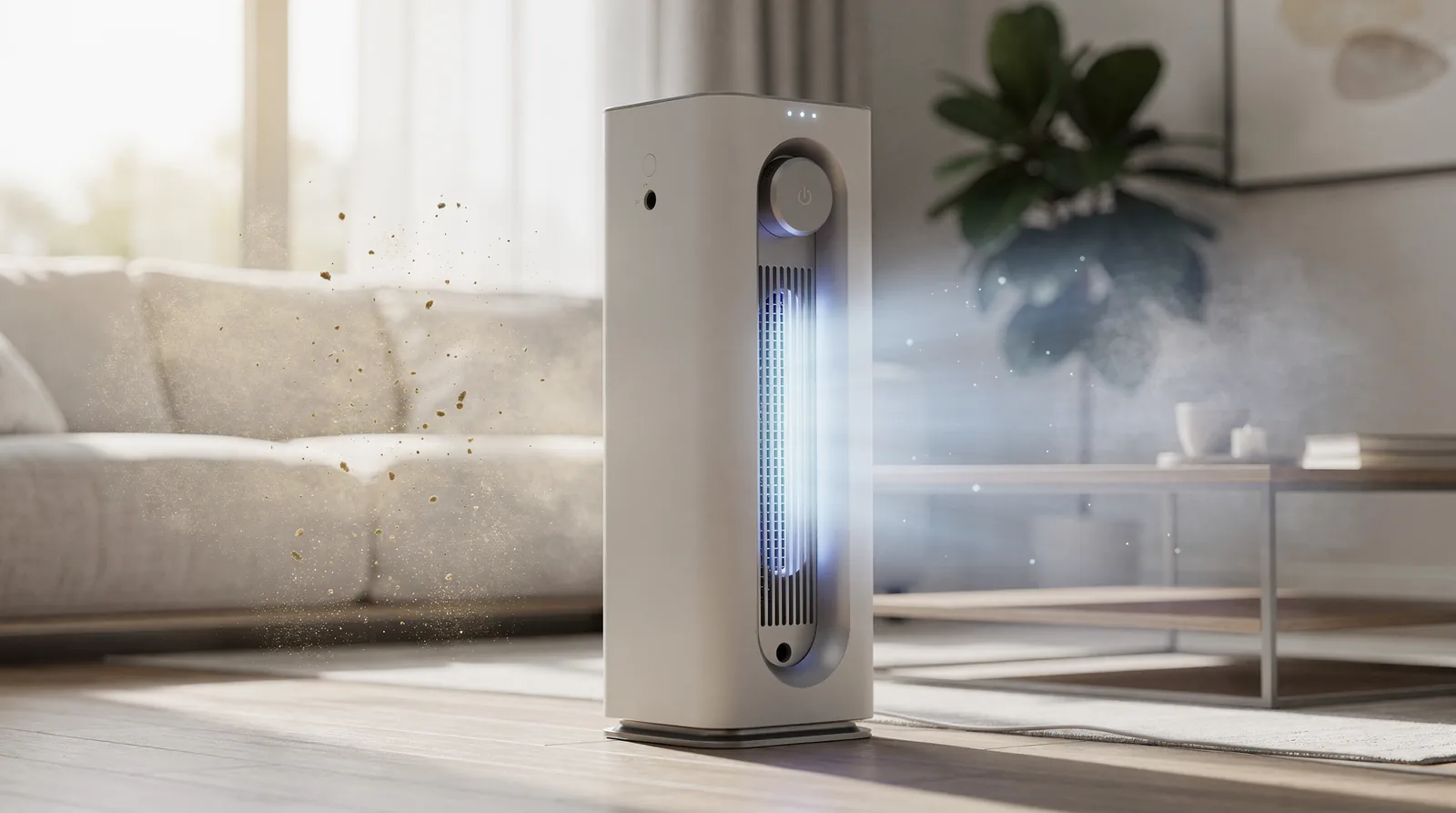
Airborne pathogens and particulates threaten patient safety long before symptoms appear. Active ion technology neutralizes these contaminants at the molecular level, breaking down pollutants without releasing harsh chemicals into patient care areas. For healthcare facility managers, this distinction carries weight: chemical-based purification introduces its own compliance and exposure risks. Ion-based systems eliminate that trade-off entirely. Clean air becomes a built-in property of the environment rather than a byproduct of aggressive treatment.
Facilities conducting an indoor air quality inspection services review often uncover recurring contamination in ductwork, waiting areas, and patient rooms. Ion purification addresses this at the source, continuously treating circulating air rather than reacting to problems after detection.
How quickly can ion purification integrate into an existing hospital HVAC system?
Integration happens fast. Ion purification devices operate on a plug-and-play basis, setting up in minutes rather than days. They connect directly with existing HVAC infrastructure, so operations teams avoid the downtime and disruption of a full retrofit.
Does ion purification disrupt daily hospital operations during installation?
Disruption stays minimal. Because the devices integrate with current HVAC systems instead of replacing them, facilities avoid extended shutdowns in critical zones like operating rooms or ICUs.
Key operational advantages include:
- Chemical-free neutralization of airborne contaminants, reducing exposure risk for immunocompromised patients
- Rapid deployment compatible with existing ductwork and air handling units
- Continuous protection rather than periodic chemical treatment cycles
For EHS professionals balancing infection control mandates with facility uptime, ion purification offers a practical, low-disruption path to measurably cleaner air.
What Regulations Govern Healthcare Facility Air Quality?
State-level regulations mandate certified training for any professional handling environmental hazard identification, risk assessment, and abatement work tied to indoor air quality. Facilities that skip this credentialing step expose patients and staff to unmanaged contaminant risks and potential compliance penalties. For hospital operations directors, this means vetting vendors carefully before allowing them near sensitive HVAC systems or air handling units.
Compliance rules extend beyond one contaminant category. State health authorities require training and certification for firms engaged in hazard identification, planning, and abatement design work. A standard that reflects how seriously regulators treat air quality risk in occupied buildings. Older healthcare campuses face particular scrutiny, since aging infrastructure often carries legacy materials that require specialized handling.
Who Actually Performs These Air Quality Inspections?
Industrial hygienists and indoor environmental health inspectors carry out this work. These specialists focus continuously on identifying and eliminating airborne contaminants inside healthcare settings, rather than treating inspection as a one-time event. Continuous attention matters in hospitals. Infection control depends on consistently clean air across patient rooms, operating suites, and shared corridors.
How Does Steira Air Support Compliance Efforts?
Steira Air LLC operates a structured, proactive maintenance and inspection program built for healthcare, education, government, and other critical facilities. Indoor Air Quality Inspection Services delivered through this program help EHS professionals stay ahead of regulatory expectations rather than reacting after problems surface.
Facility teams working with this kind of program typically gain:
- Ongoing coil monitoring to catch efficiency losses before they affect air handling performance
- Structured inspection cycles aligned with critical-facility operational demands
- Documentation support that helps environmental health teams demonstrate due diligence
Regulatory frameworks change slowly, but enforcement expectations do not soften for hospitals. Facility managers who partner with trained, credentialed inspection teams reduce exposure to compliance gaps while protecting the people inside their buildings every day.
How Should Facilities Choose An Inspection Partner?
Facility managers should evaluate credentials, sector-specific experience, and measurable performance outcomes before selecting an indoor air quality inspection services provider. A hospital’s air handling network carries different risks than an office building. An unqualified vendor turns routine maintenance into a costly liability. Overlooking these factors invites unplanned downtime, higher energy costs, and compliance exposure that no operations director wants to explain to leadership.
Credentials matter more in healthcare than almost any other sector. Steira Air operates as a Service-Disabled Veteran-Owned Small Business (SDVOSB), a designation that reflects disciplined execution and technical accountability on every job site. That structure translates into predictable processes, documented reporting, and a proactive posture rather than reactive scrambling when a coil fails or an air handler underperforms.
Does experience level actually affect inspection quality?
Yes — experience directly shapes how quickly a technician diagnoses hidden problems. Teams with over 80 combined years of industry experience bring precision-driven maintenance. Rapid-response repair capability to facilities that cannot absorb downtime. Hospitals fall squarely into that category. A delayed repair in a surgical suite or isolation room carries consequences far beyond inconvenience.
What else separates a strong healthcare IAQ partner from a generic vendor?
Sector-specific dedication is the differentiator. Firms with decades of focused healthcare experience, supported by compassionate consulting teams, understand infection-control protocols and patient-safety stakes in ways general contractors do not.
Facility managers should confirm a prospective partner delivers on these outcomes:
- Reduced operating costs through system optimization
- Extended equipment life via predictive maintenance scheduling
- Elimination of unplanned downtime through real-time performance monitoring
- Documented healthcare-sector track record and technical accreditation
Partners meeting all four criteria protect both patient safety and the capital budget simultaneously.
What Happens After Inspection Findings Arrive?
Findings translate directly into a customized remediation plan built around the specific contaminants and equipment issues uncovered during the visit. Facility managers receive a plan tied to actual data, not generic recommendations. That specificity matters when infection control protocols and regulatory documentation are on the line.
Steira Air brings nine years of applied experience to this stage of the process. That track record spans HVAC cleaning, servicing and repair, filter change programs, coil monitoring and management systems, broader indoor air quality inspection services, and ice machine cleaning across healthcare, education, and government facilities. Hospital operations directors get a remediation partner who has already solved similar problems in comparable mission-critical settings.
How is remediation prioritized after an inspection?
Findings get sorted by risk level and operational impact, not simply by order of discovery. A coil showing early efficiency loss might wait. A contamination source near a patient care area typically moves to the front of the queue. Environmental health and safety professionals can expect the plan to reflect clinical risk alongside equipment condition.
Will remediation disrupt hospital operations?
Coordination happens closely with facility teams before any work begins, specifically to limit interruption to patients and staff. Scheduling accounts for patient care hours, isolation protocols, and access restrictions common to healthcare environments. Work crews adjust timing rather than forcing facilities to adjust around them.
The remediation phase typically includes:
- A written plan mapping each finding to a corrective action
- Sequencing that accounts for infection control zones and patient proximity
- Direct coordination with facility staff before work begins
- Documentation suited to compliance and regulatory review
Facility teams retain visibility throughout, rather than waiting for a final report. That ongoing communication keeps operations directors informed and keeps disruption to a minimum.
How Do You Schedule An IAQ Assessment?
Scheduling starts with a phone call or an email — no complicated intake forms required. Facility managers can reach the Steira Air team directly by phone to request an indoor air quality inspection service for their hospital, clinic, or care facility. Delays in scheduling mean extended exposure to unmonitored pollutants, coil inefficiencies, and airborne contaminants that put patients and staff at risk. A quick call closes that gap before it becomes a compliance or health hazard.
Email works just as well for facilities that prefer a documented request trail. Operations directors and EHS professionals can send inquiries via email to request a formal quote, outline facility size, or flag specific concerns like coil buildup or elevated VOC readings. Written requests also help staff track response timelines against internal compliance schedules.
What Information Should Facility Managers Have Ready?
Have the facility address, square footage, and any known air quality complaints on hand before calling. Mentioning HVAC system age or recent maintenance history speeds up the assessment scheduling process considerably.
Is There a Physical Office for In-Person Consultations?
Yes. Steira Air operates out of 2330 Scenic Highway South, 175, Snellville, GA 30078, for facilities that prefer an in-person meeting before committing to service.
Scheduling windows matter too. The team stays available Monday through Saturday, 8 AM to 5 PM, giving healthcare operations staff flexibility around shift changes and patient-care priorities. Facilities operating on tight compliance deadlines benefit from this extended weekly window:
- Phone: Contact Steira Air directly by phone, the fastest option for urgent scheduling
- Email: Contact Steira Air directly by email, best for documented quote requests
- In-person: 2330 Scenic Highway South, 175, Snellville, GA 30078
- Hours: Monday–Saturday, 8 AM–5 PM
Indoor air quality inspection services represent a critical investment in healthcare facility operations, directly supporting patient recovery and staff wellness. By identifying contaminants, assessing ventilation systems, and evaluating filtration effectiveness, these inspections establish the foundation for sustained environmental control. Healthcare administrators who prioritize comprehensive air quality assessments demonstrate commitment to infection prevention. Operational excellence, ensuring their facilities maintain the highest standards of care and safety.
FAQ
Is IAQ testing legally required in healthcare facilities?
State health agencies operate dedicated indoor air quality branches, signaling regulators expect ongoing oversight of occupied healthcare buildings. Skipping inspection cycles exposes administrators to citations and puts patients at risk.
What happens when healthcare facilities skip IAQ inspections?
Contaminants accumulate unnoticed inside ductwork, coils, and air handling units, raising infection risk for immunocompromised patients. Facilities also face reduced HVAC efficiency, higher energy costs, and regulatory non-compliance.
What does Steira Air’s IAQ inspection service include?
Steira Air combines real-time HVAC coil monitoring through its Coil Monitoring and Management System with preventive maintenance protocols. The service also includes visual assessment, surface testing, and airborne pollutant analysis for healthcare facilities in Snellville, GA.
Facts
- Steira Air is located in Snellville, GA, US.