Commercial HVAC Commissioning: Optimize Efficiency & Air Quality
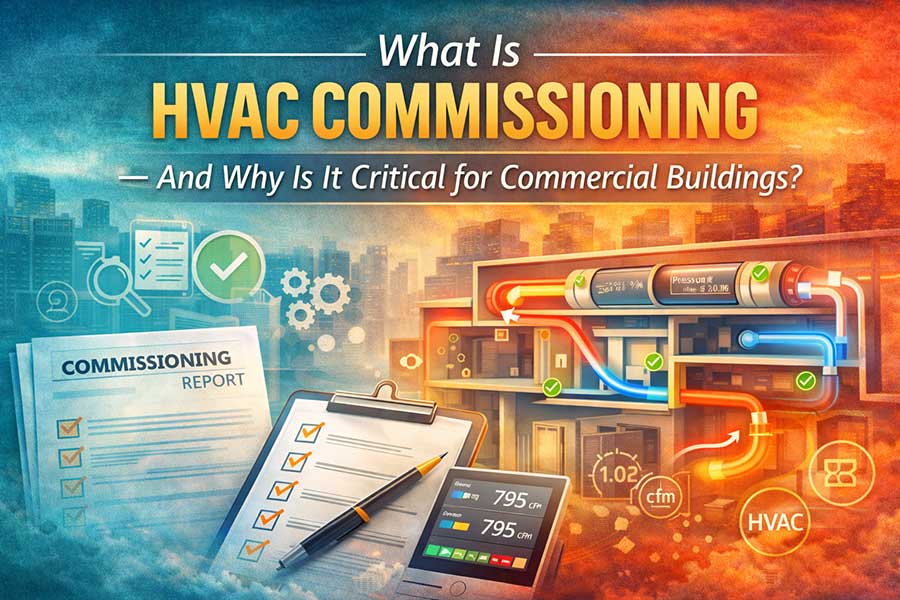
Installing an HVAC system is only half the job.
If it’s not tested, verified, and optimized after installation, your building may suffer from poor airflow, energy waste, and indoor air quality issues — even with brand-new equipment.
That’s where HVAC commissioning comes in.
In this guide, you’ll learn:
- What HVAC commissioning is
- Why it matters for commercial and government facilities
- When it should be performed
- What happens during the commissioning process
- How Steira Air ensures systems operate as designed
What Is HVAC Commissioning?
Direct Answer:
HVAC commissioning is a systematic process of testing, verifying, and documenting that a building’s HVAC system is installed and operating according to design specifications and performance standards.
It ensures:
- Proper airflow
- Correct temperature control
- Accurate sensor calibration
- Efficient energy performance
- Safe ventilation rates
Commissioning confirms your system works the way it was intended to.
Why Is HVAC Commissioning Important?
Without commissioning, systems often operate:
- Out of balance
- With incorrect control settings
- At higher energy consumption
- Below ventilation standards
Organizations like ASHRAE establish ventilation and performance standards that commercial buildings are expected to meet.
Commissioning ensures compliance and performance.
What Problems Does HVAC Commissioning Prevent?
Without commissioning, systems often operate:
- Out of balance
- With incorrecta
HVAC systems that skip commissioning frequently experience:
- Uneven heating and cooling
- Poor indoor air quality
- Excess humidity or dryness
- High energy bills
- Frequent equipment breakdowns
- Occupant comfort complaints
Many of these issues are not equipment failures — they are configuration and verification failures.
control settings - At higher energy consumption
- Below ventilation standards
Organizations like ASHRAE establish ventilation and performance standards that commercial buildings are expected to meet.
Commissioning ensures compliance and performance.
When Should HVAC Commissioning Be Done?
Quick Answer:
HVAC commissioning should be performed after new construction, major renovations, system replacements, or when persistent performance issues occur.
Ideal Times to Commission:
- New commercial construction
- Government facility upgrades
- Healthcare building expansions
- System retrofits
- Persistent comfort complaints
Commissioning is especially critical before occupancy to ensure proper ventilation and safety.
What Happens During HVAC Commissioning?
Commissioning is a detailed and structured process.
Step-by-Step Overview:
- Review design documents and specifications
- Inspect equipment installation
- Test airflow rates and ventilation performance
- Verify thermostat and control calibration
- Check pressure relationships
- Validate energy efficiency performance
- Provide documentation and performance reports
The goal: Confirm the system operates exactly as designed.
HVAC Commissioning vs. Routine Maintenance
Many building owners confuse commissioning with maintenance.
Here’s the difference:
Maintenance:
Keeps equipment running.
Commissioning:
Verifies the system is running correctly and efficiently.
You can maintain a poorly configured system for years — and still waste energy and compromise air quality.
Commissioning ensures you’re maintaining the right setup.
How HVAC Commissioning Improves Indoor Air Quality
Proper commissioning ensures:
- Adequate fresh air intake
- Balanced airflow
- Correct humidity control
- Accurate CO₂ monitoring
- Elimination of stagnant air zones
The Environmental Protection Agency notes that inadequate ventilation contributes to indoor pollutant buildup in commercial buildings.
Commissioning ensures ventilation systems function as intended — not just installed.
HVAC Commissioning Case Study: Office Building Success
A newly constructed office building reports:
- Conference rooms feeling stuffy
- Temperature swings throughout the day
- Higher-than-expected utility costs
Commissioning reveals:
- Outside air dampers improperly set
- Airflow imbalance across floors
- Sensors reading inaccurate temperatures
After adjustments:
- Comfort stabilized
- Energy costs reduced
- Ventilation compliance achieved
The system wasn’t broken — it just wasn’t optimized.
What Is Retro-Commissioning?
Direct Answer:
Retro-commissioning is the process of evaluating and optimizing existing HVAC systems in older buildings to improve performance and efficiency.
It is ideal for:
- Aging commercial properties
- Government buildings
- Facilities with rising energy costs
- Buildings with recurring comfort complaints
Retro-commissioning often results in measurable energy savings without replacing equipment.
Why Professional Commissioning Matters
Commissioning requires:
- Specialized airflow measurement tools
- Pressure testing equipment
- System diagnostic expertise
- Compliance knowledge
Guesswork leads to inefficiency.
Data leads to optimization.
How Steira Air Supports HVAC Commissioning
At Steira Air, we provide:
- HVAC commissioning
- Retro-commissioning services
- Airflow testing and balancing
- Indoor air quality assessments
- Ventilation performance verification
We ensure commercial, residential, and government facilities operate safely, efficiently, and in compliance with design standards.
Our approach is data-driven, precise, and performance-focused.
Key Takeaways
- HVAC commissioning verifies system performance
- It prevents energy waste and airflow imbalance
- Commissioning ensures ventilation compliance
- Retro-commissioning improves older buildings
- Proper verification protects health and efficiency
Ready to Ensure Your HVAC System Is Performing Correctly?
If your building is newly constructed, recently renovated, or experiencing performance issues, HVAC commissioning may be the missing step.
Visit https://steiraair.com/ to schedule a consultation and ensure your HVAC system operates exactly as designed.
Contact Us
Get a Free Quote today
