How Often to Replace Air Filters: Steira Air’s Homeowner Guide
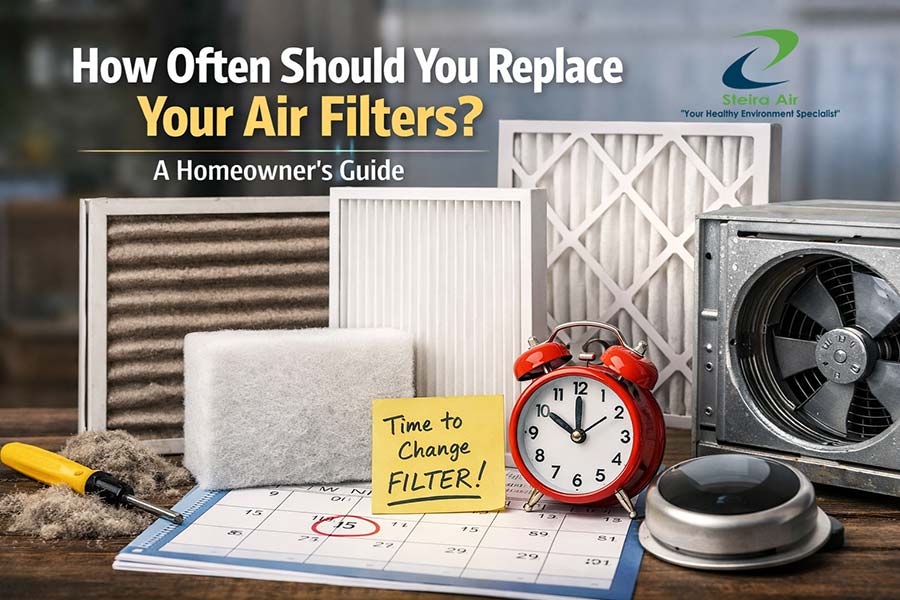
If you’re investing in cleaner indoor air, one of the most common questions is: how often should you replace your air filters? Whether you use a whole-home system or a portable purifier, filter maintenance directly impacts air quality, energy efficiency, and long-term performance.
In this guide, we’ll break down exactly when to replace your air filters, what affects their lifespan, and how proper maintenance helps systems like those from Steira Air perform at their best.
Quick Answer: How Often Should You Replace Air Filters?
Most air filters should be replaced every 1 to 3 months.
However, this depends on:
- The type of filter
- Indoor air quality levels
- Presence of pets
- Allergies or respiratory sensitivities
- Local pollution levels
- Usage frequency
Now let’s break this down further.
Why Replacing Air Filters Matters
Your air filter traps:
- Dust
- Pollen
- Pet dander
- Mold spores
- Smoke particles
- Bacteria and airborne pollutants
When the filter becomes clogged:
- Airflow decreases
- Your system works harder
- Energy bills increase
- Indoor air quality drops
In severe cases, dirty filters can circulate contaminants back into your living space.
For homes prioritizing clean air solutions like those offered by Steira Air, regular filter replacement ensures the system operates at peak efficiency.
How Often Should You Replace Different Types of Air Filters?
1. Standard Fiberglass Filters
Replace every 30 days.
These are inexpensive but clog quickly and offer basic filtration.
2. Pleated Filters
Replace every 60–90 days.
They capture smaller particles and last longer than fiberglass filters.
3. HEPA Filters
Replace every 6–12 months (depending on usage).
HEPA filters are designed to trap 99.97% of particles as small as 0.3 microns, making them ideal for:
- Allergy sufferers
- Homes with pets
- High-pollution areas
Advanced air purification systems, such as those designed for improved indoor air quality, rely heavily on timely HEPA maintenance.
Factors That Affect Filter Lifespan
1. Pets in the Home
Pet hair and dander significantly reduce filter lifespan.
If you have pets, consider replacing filters every 30–60 days.
2. High Pollution Areas
Urban environments or areas near highways accumulate more airborne particles.
3. Allergies or Asthma
If someone in your home has respiratory issues, changing filters more frequently can help reduce symptoms.
4. Smoke Exposure
Wildfire smoke or indoor smoking dramatically shortens filter life.
5. System Usage
If your HVAC or purification system runs continuously, expect shorter replacement cycles.
Signs It’s Time to Replace Your Air Filter
Even if you’re unsure of the timeline, look for these warning signs:
- Visible dust buildup on vents
- Increased allergy symptoms
- Musty indoor smell
- Higher energy bills
- Weak airflow from vents
- Filter appears gray or clogged
If you notice any of these, it’s time for a change.
How Regular Filter Replacement Improves Indoor Air Quality
Proper filter maintenance helps:
- Maintain consistent airflow
- Extend system lifespan
- Reduce strain on components
- Improve energy efficiency
- Maintain optimal purification performance
Clean filters allow advanced air purification systems to effectively capture fine particles, bacteria, and pollutants without restriction.
Pro Tips to Maximize Filter Performance
- Set a calendar reminder every 30–60 days
- Inspect filters monthly
- Keep surrounding vents dust-free
- Use the correct filter size and rating
- Avoid running systems without a filter
If you’re using a high-performance air purification solution, proper filter care ensures you get the full benefit of your investment.
Final Takeaways: Air Filter Replacement Tips for Clean Home Air
- Most air filters need replacement every 1–3 months
- Homes with pets or allergies require more frequent changes
- HEPA filters typically last longer but still require monitoring
- Dirty filters reduce air quality and increase energy costs
Clean air starts with proper maintenance.
If you’re looking to upgrade your indoor air quality with reliable purification solutions, explore the advanced systems available at Steira Air and ensure your home breathes cleaner, healthier air year-round.
Contact Us
Get a Free Quote today
