Most building owners focus on heating and cooling when thinking about HVAC systems. But one of the most important functions of any building system is often overlooked: ventilation.
Without proper ventilation, indoor air can quickly become stale, contaminated, and unhealthy.
Whether you manage an office building, healthcare facility, government property, or residential complex, ventilation plays a major role in air quality, occupant comfort, and system efficiency.
In this guide, we’ll explain:
What building ventilation is
Why it matters for indoor air quality
Signs your building has poor ventilation
How ventilation problems are fixed
How Steira Air helps optimize building airflow
What Is Building Ventilation?
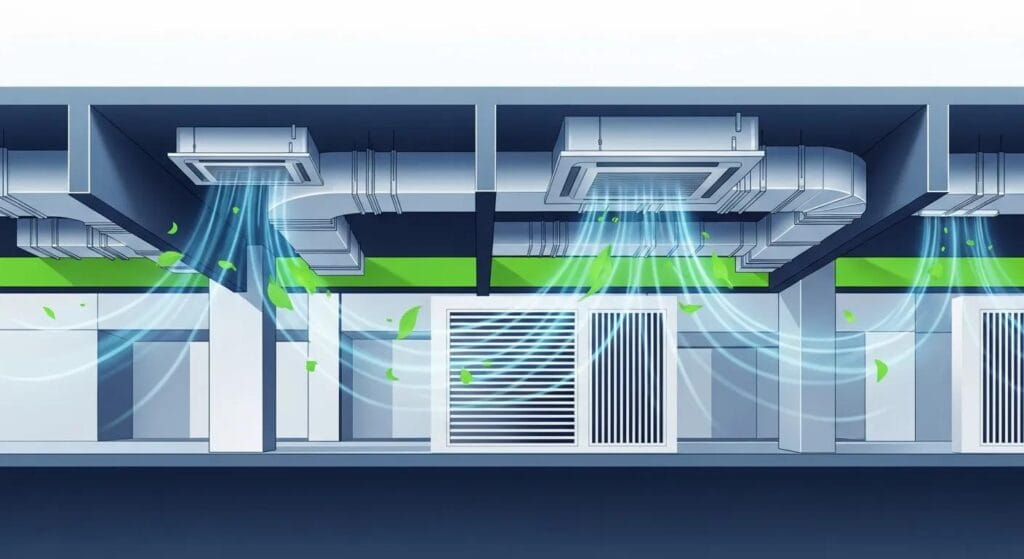
Direct Answer:Building ventilation is the process of bringing fresh outdoor air into a building while removing stale indoor air to maintain healthy indoor air quality.
Ventilation systems help control:
Carbon dioxide (CO₂) levels
Indoor pollutants
Odors
Humidity
Airborne particles
Without proper ventilation, contaminants can accumulate inside buildings.
Why Is Ventilation Important?
Proper ventilation protects both occupant health and building performance.
Poor ventilation can lead to:
Headaches and fatigue
Increased spread of airborne contaminants
Mold growth from trapped humidity
Stale or stuffy air
Reduced productivity
According to the Environmental Protection Agency, inadequate ventilation is one of the leading contributors to indoor air quality problems in commercial buildings.
Simply put: fresh air matters.
What Are the Signs of Poor Ventilation?
Many ventilation problems go unnoticed until complaints begin.
Common Warning Signs:
Stuffy or stale indoor air
Persistent odors
Excess humidity or condensation
Uneven airflow throughout the building
Employees feeling tired or uncomfortable
High indoor CO₂ levels
If several of these symptoms occur regularly, your building may not be receiving adequate fresh air.
How Much Fresh Air Does a Building Need?
Quick Answer:Most commercial buildings must meet ventilation standards that provide a specific amount of outdoor air per occupant and per square foot of space.
Standards from ASHRAE recommend minimum ventilation rates to ensure healthy indoor environments.
These standards help prevent:
Air stagnation
Pollutant buildup
Oxygen depletion
Meeting these guidelines requires proper system design and airflow balancing.
What Causes Ventilation Problems?
Ventilation issues can develop for many reasons.
Common Causes:
Improper HVAC system design
Blocked or closed outdoor air dampers
Poor airflow balancing
Dirty or clogged filters
Aging ventilation equipment
Changes in building occupancy
Even well-designed systems can develop ventilation problems over time without regular inspection.
How Are Ventilation Problems Diagnosed?
The only way to accurately evaluate ventilation is through professional airflow testing and indoor air quality analysis.
Technicians measure:
Outdoor air intake levels
CO₂ concentrations
Airflow distribution
System pressure levels
Ventilation performance
This data reveals whether your building is receiving enough fresh air.
Office Building Ventilation Case Study: Remedying Headaches & Fatigue
Consider an office building where employees frequently complain about headaches and fatigue during the afternoon.
An air quality assessment reveals:
CO₂ levels rising throughout the day
Insufficient outdoor air intake
Airflow imbalance between floors
After ventilation adjustments and airflow balancing:
Air quality improves
Complaints decrease
Occupant comfort increases
Sometimes a simple ventilation correction can dramatically improve indoor environments.
How Ventilation Affects Energy Efficiency
Some building owners worry that increasing ventilation will increase energy costs.
But proper ventilation actually improves efficiency when managed correctly.
Balanced systems:
Reduce HVAC strain
Improve temperature control
Prevent equipment overwork
Maintain optimal humidity levels
Ventilation optimization is often part of broader HVAC performance improvements.
How Steira Air Improves Building Ventilation
At Steira Air, we specialize in diagnosing and correcting airflow and ventilation issues in commercial, residential, and government buildings.
Our services include:
Indoor Air Quality Testing
Airflow Testing and Balancing
Ventilation Performance Analysis
HVAC Commissioning
System Optimization
We use precise measurements and professional diagnostics to ensure buildings receive the fresh air they need.
Healthy buildings start with healthy airflow.
Key Takeaways
Ventilation removes stale air and brings in fresh outdoor air
Poor ventilation contributes to indoor air quality problems
Stuffy air, odors, and fatigue are common warning signs
Professional testing identifies ventilation deficiencies
Optimized airflow improves both comfort and efficiency
Ready to Improve Your Building’s Airflow?
If your building feels stuffy, uncomfortable, or poorly ventilated, professional testing can reveal the cause.
Visithttps://steiraair.com/ to schedule an indoor air quality and ventilation assessment and ensure your building’s air is clean, fresh, and properly balanced.
Since no questions were provided, we cannot offer specific answers about Steira Air's HVAC and indoor air quality solutions. Please submit your questions for expert guidance.
What are the benefits of commercial building ventilation?
Commercial building ventilation offers significant benefits, including improved occupant health, enhanced comfort, and increased energy efficiency by removing pollutants and controlling air quality.
How does ventilation impact indoor air quality?
Ventilation significantly impacts indoor air quality by removing stale air, pollutants, and moisture, while introducing fresh outdoor air to create a healthier environment.
What signs indicate poor ventilation in buildings?
Signs of poor ventilation in buildings include persistent odors, stuffy air, condensation, and increased occupant allergies or respiratory issues.
How can I improve ventilation in my building?
Improving ventilation in your building involves ensuring adequate fresh air intake and proper exhaust. Steira Air can assess your system and implement solutions for optimal airflow and air quality.
What are common causes of inadequate ventilation?
Common causes of inadequate ventilation include blocked vents, undersized systems, poor design, and lack of maintenance, all impacting air quality.
How does ventilation affect energy efficiency?
Ventilation's effect on energy efficiency is significant; proper systems balance fresh air intake with energy recovery, minimizing heating/cooling losses for optimal building performance.
What solutions enhance commercial building ventilation?
Solutions that enhance commercial building ventilation include upgrading HVAC systems, implementing advanced filtration, and optimizing airflow for improved indoor air quality and occupant well-being.
Why is proper airflow crucial for health?
Proper airflow is crucial for health because it removes pollutants, reduces airborne contaminants, and ensures a steady supply of fresh air, promoting well-being and preventing illness.
How can HVAC systems optimize building ventilation?
HVAC systems optimize building ventilation by controlling airflow, filtering air, and managing temperature and humidity for healthier indoor environments.
Proper ventilation not only enhances indoor air quality but also contributes to the overall health and productivity of occupants. By ensuring a consistent flow of fresh air, buildings can minimize the risks associated with indoor pollutants and allergens, leading to a healthier environment.
Research has shown that improved ventilation can lead to significant reductions in absenteeism and increased worker satisfaction. For instance, studies indicate that employees in well-ventilated spaces report higher levels of comfort and productivity, which can translate into better performance and lower turnover rates.
Types of Ventilation Systems
There are several types of ventilation systems used in commercial buildings, each designed to meet specific needs. These include natural ventilation, mechanical ventilation, and hybrid systems that combine both methods to optimize air quality and energy efficiency.
Natural ventilation relies on windows, vents, and other openings to facilitate airflow, while mechanical systems use fans and ducts to control air movement. Understanding the differences between these systems can help building owners select the most appropriate solution for their specific environment and requirements.
Maintenance of Ventilation Systems
Regular maintenance of ventilation systems is crucial to ensure their efficiency and longevity. Neglecting maintenance can lead to reduced airflow, increased energy costs, and potential health hazards due to the accumulation of dust and pollutants.
Implementing a routine maintenance schedule, which includes cleaning ducts, replacing filters, and inspecting components, can significantly enhance system performance. This proactive approach not only improves indoor air quality but also extends the lifespan of the ventilation equipment, ultimately saving costs in the long run.
Impact of Ventilation on Building Codes
Building codes and regulations often stipulate minimum ventilation requirements to ensure the safety and health of occupants. Understanding these codes is essential for building owners and managers to comply with legal standards and avoid potential penalties.
Recent updates to building codes have increasingly focused on indoor air quality, emphasizing the need for effective ventilation systems. By staying informed about these regulations, building owners can ensure their properties meet necessary standards while also promoting a healthier indoor environment.